Key takeaways
- Coumarin in Vietnamese cassia is high by nature: typically thousands of mg/kg, versus a trace in Ceylon cinnamon. It is what cassia is, not a defect.
- The EU does not limit coumarin in the cinnamon spice. Regulation (EC) No 1334/2008 limits it in named finished foods, so the ceiling that binds you belongs to your product.
- EFSA sets a tolerable daily intake (TDI) for coumarin of 0.1 mg per kg of body weight per day.
- Coumarin level moves with species, provenance and bark age, so it is a per-lot figure, not a property of the word cassia.
- The only reliable control is a coumarin result by HPLC on the actual lot, matched to the dose and category of your finished food.
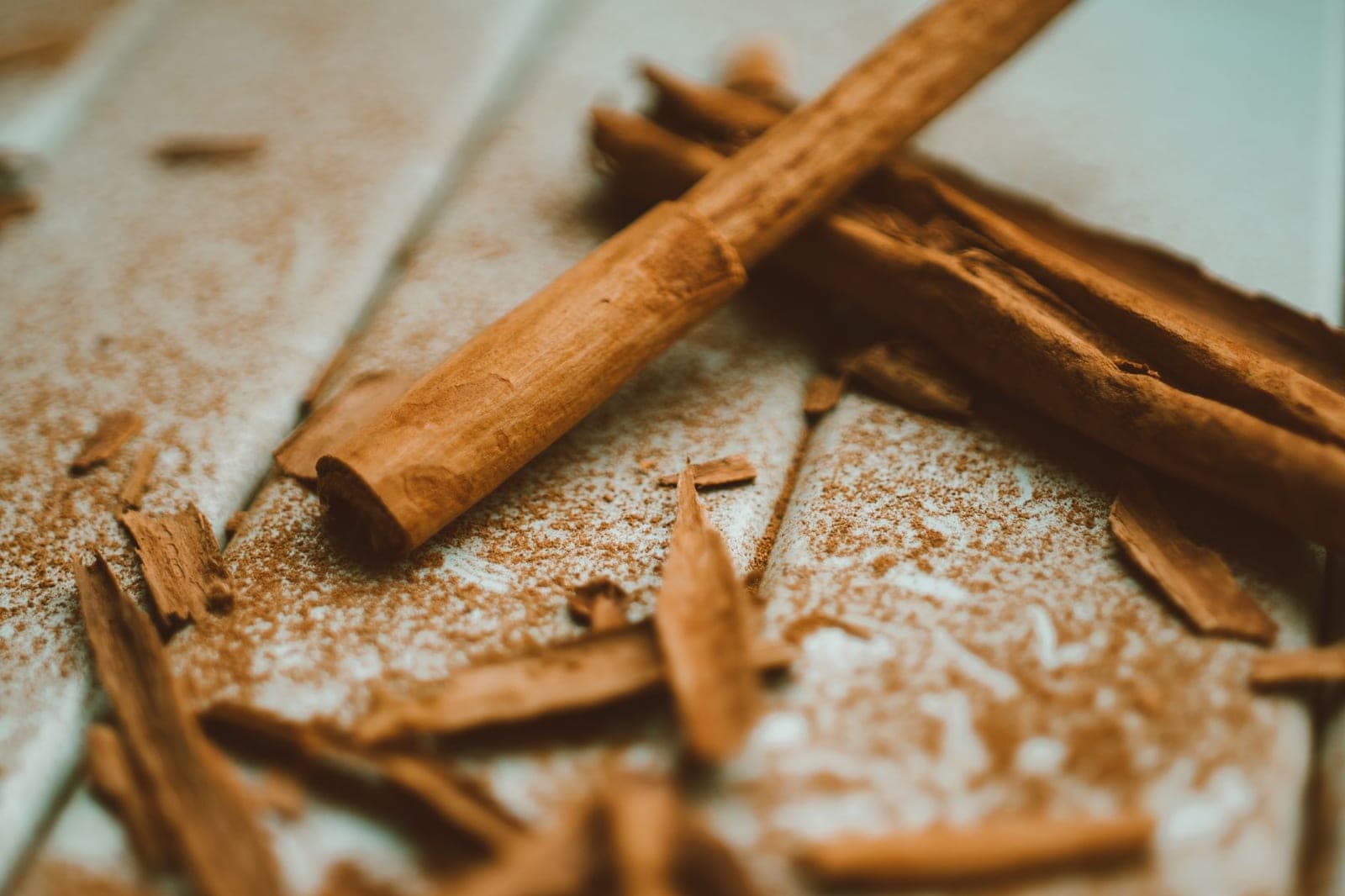
Coumarin in Vietnamese cassia is high by nature, and that is not a flaw in the material. Vietnam is one of the world's largest cinnamon exporters, and nearly all of what it ships is cassia rather than Ceylon. Buyers choose cassia for its high volatile oil and for the deep, sweet-hot flavour that Ceylon cinnamon cannot match, and the same chemistry that produces the flavour is why cassia carries far more coumarin. So the useful question is never whether a lot contains coumarin. It is how much, whether the finished food can carry that much, and whether the paperwork proves it lot by lot rather than in general.
Cassia vs Ceylon: how much coumarin?
Ceylon (Cinnamomum verum) carries a trace by comparison. A survey of 60 retail cassia samples measured 2,650 to 7,017 mg/kg of coumarin by HPLC, averaging 3,856, while its Cinnamomum verum control from a Sri Lankan plantation came back below the limit of detection. The gap between the two species is three orders of magnitude, not a margin.
Why coumarin is regulated at all
Coumarin is a naturally occurring aromatic compound, not a contaminant added along the supply chain. At high, sustained intake it is linked to liver effects in sensitive individuals, so the European Food Safety Authority set a tolerable daily intake of 0.1 mg per kg of body weight, roughly 6 mg a day for a 60 kg adult. The regulation is a public-health instrument aimed at habitual consumption, not a quality grade for the spice.
What the EU actually limits: the food, not the spice
It caps it in named finished foods where cinnamon is the source, and the ceiling depends on the category: Annex III, Part B sets 50 mg/kg for traditional and seasonal bakery ware that references cinnamon in the labelling, 20 mg/kg for breakfast cereals including muesli, 15 mg/kg for other fine bakery ware, and 5 mg/kg for desserts. The labelling condition on the first of those matters commercially: the same biscuit loses 35 mg/kg of headroom if the pack stops naming cinnamon.
What drives the coumarin level in a lot
Coumarin is not one number for cassia. It moves with species (Saigon and cassia run high, Ceylon is a different animal), with provenance and soil, with bark age and part, and with season and processing. This is the ordinary variability of an agricultural product, and it is why a coumarin claim attached to a species name is weaker than a tested figure attached to a lot.
How it is tested: HPLC, per lot
Coumarin is measured by high-performance liquid chromatography on a ground, representative sample. The result is only as good as the sampling: one figure stands for the lot it was drawn from, not the next container. That is why a serious specification asks for testing per lot rather than a one-time certificate kept on file.
What it means for your specification
Put coumarin, mg/kg, by HPLC, per lot in the spec and treat it like moisture or oil. There is no legal maximum for the spice, so low coumarin alone means nothing: state the ceiling your finished-food maths needs, in mg/kg, and let the origin be chosen to meet it. If an application genuinely needs low coumarin, that is a Ceylon conversation, a blend, or a cassia origin tested for the low end of its range.
Choosing cassia or Ceylon
Coumarin is one input to that choice, not the whole of it. Cassia brings the bold, sweet heat and the high oil that many formulations are built around, at a price point Ceylon rarely meets. Ceylon brings a lighter, more citric profile and a coumarin level low enough to disappear from most finished-food maths. Reformulating between them is a recipe change, not a swap.
What the ceiling means as an inclusion rate
The limit is on the finished food, so the number a formulator needs is not the coumarin in the spice but the share of spice the recipe can carry. Divide the ceiling by the coumarin in your lot. At the 3,856 mg/kg average from the survey above, traditional and seasonal bakery ware naming cinnamon on the pack tops out around 1.3 per cent cassia, other fine bakery ware around 0.39 per cent, breakfast cereals around 0.52 per cent, and desserts around 0.13 per cent.
Those are ceilings, not targets, and they move with the lot. A cassia at the low end of the surveyed range, 2,650 mg/kg, buys roughly a third more inclusion than one at 7,017 mg/kg for the same finished-food limit, which is the entire commercial argument for testing per lot rather than per supplier. It is also why a specification that names a maximum coumarin figure is worth more than one that names an origin: the origin does not tell you the headroom, and the figure does.
It also changes what a quotation is worth. Two lots at the same nominal grade and the same price can differ by a factor of two and a half in coumarin, which for a formulator is the difference between a recipe that works and one that has to be rebalanced. A quotation that carries a coumarin figure, or at least a ceiling the supplier will stand behind, is a quotation you can price against. One that carries only an origin and a grade is a quotation you have to test before you can use, and the cost of that test belongs in the comparison.
Run the same division against your own recipe before agreeing a price. A buyer who knows they need cassia under 3,000 mg/kg is having a different conversation from one who has only been told that cassia is high in coumarin, and the second conversation usually ends in a lot that works for one product line and quietly fails another.
What good paperwork shows
Ask to see the coumarin figure on the Certificate of Analysis, not in a separate email that gets lost. A useful CoA names the lot, states the coumarin result in mg/kg with the method beside it, and carries the origin and species rather than the trade name alone. Insist on two things: per-lot testing, and the origin printed on the document.
How Vinaherb documents it
Every quotation is against a defined lot, and a coumarin figure by HPLC travels on the Certificate of Analysis for buyers whose application is coumarin-bound. If your recipe has a ceiling, put the number in your request for a quote and we will quote origins and lots that clear it. For more on reading a spec, see our Insights.
Storage, and why a figure can move
A coumarin result describes the lot as it was when the sample was drawn. What happens after that is mostly a moisture and oil question rather than a coumarin question: cassia held warm and damp loses volatile oil and moves toward mould, and a lot that has lost oil is a different material from the one you bought even where the coumarin figure has barely shifted. Specify the moisture at your gate rather than only at the mill, and store to it.
Where a buyer holds material for a long time, the useful discipline is to retain the original sample and to re-test on a schedule that matches the shelf life being claimed downstream. That is not an extra cost so much as the evidence that a claim made on a label was still true when the product was made.
Blending is not a compliance plan
It is tempting to treat coumarin as an arithmetic problem: buy a high lot cheaply, blend it with something lower, and land under the number. It works on paper and it fails in practice for two reasons. The first is homogeneity, because a blend of ground botanicals is only as even as the mixing, and a limit that applies to a finished food applies to the portion a person eats rather than to the average of the batch. The second is that the blend changes the flavour profile the formulation was built around, which is usually the reason cassia was chosen in the first place.
Where a lower figure is genuinely needed, the honest routes are to buy a lot that carries it, to reformulate the inclusion rate, or to move to a different species and accept the different flavour. Each of those is a decision someone can defend later. A blend built to land under a limit is a decision nobody wants to explain.
What buyers outside the EU ask for
The European rules are the most specific, which is why they dominate the conversation, but they are not the only ones a lot has to satisfy. Buyers in other markets tend to ask the same underlying question in their own vocabulary: what is in this material, who measured it, and against what method. A coumarin figure by HPLC with the method named answers that question everywhere, whether or not the destination market caps the number.
Practically, this means the paperwork that satisfies a German blender is close to the paperwork that satisfies a Japanese or a North American one, and it is worth building the specification to the strictest destination you supply rather than maintaining several. The cost of the extra figure is small. The cost of discovering at the port that a document set was built for a different market is not.
Questions worth asking before the first order
Ask which species and which province, and ask when the bark was cut. Ask for a representative sample rather than a hand picked one, and say so in writing. Ask what the coumarin figure was on the last three lots rather than on the best one, because the spread tells you more about a supplier than any single result. Ask who holds the retained sample and for how long, and ask what happens when a result lands outside specification.
None of those questions is unusual and none of them is expensive to answer. A supplier who answers them plainly is telling you how they work, and a supplier who cannot is telling you the same thing.
FAQ
Is Vietnamese cassia cinnamon high in coumarin?
Yes. Cassia, including Vietnamese and Saigon cassia, is naturally high in coumarin, typically thousands of mg/kg, while Ceylon cinnamon has only a trace.
What is the EU coumarin limit for cinnamon?
There is no EU limit on coumarin in the cinnamon spice itself. Regulation (EC) No 1334/2008 limits coumarin in specific finished foods, so the binding ceiling depends on your product.
How much coumarin is safe?
EFSA has set a tolerable daily intake (TDI) of 0.1 mg of coumarin per kg of body weight per day, roughly 6 mg a day for a 60 kg adult.
Does Ceylon cinnamon have coumarin?
Only a trace. Ceylon (Cinnamomum verum) is the low-coumarin cinnamon, which is why it is the usual answer when an application needs the flavour without the compound.
How do I source low-coumarin cinnamon?
Specify a coumarin ceiling in mg/kg for your application, require HPLC testing per lot, and choose between Ceylon, a cassia origin at the low end of its range, or a blend.
Read next
Related: our product range